
Incident Analysis
Based on the Swedish Accident Investigation Authority report. This incident shows how a two-watch system, no lookout, alcohol, and BNWAS switched off can combine into a predictable bridge-watchkeeping failure.
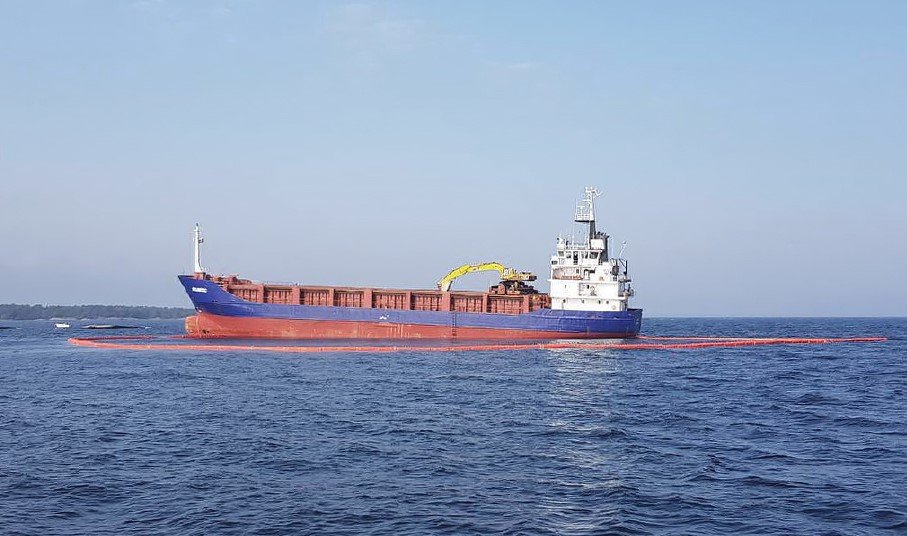
Important note: Aware Mate was not installed on Atlantic. This page uses the official investigation to show where an earlier on-board vigilance alert could have helped interrupt the incident chain. Any intervention sequence is illustrative, not proof of a live deployment.
On 23 September 2017, the vessel Atlantic grounded just south of Oskarshamn, Sweden, during the approach from Visby. No-one was injured, but the ship suffered hull and bilge-keel damage after the master, alone on the bridge, missed the turn toward port and remained on the wrong track for about 42 minutes.

The investigation concluded that the master, alone on the bridge, fell asleep shortly after the vessel turned north of Öland toward Oskarshamn. The AIS track showed no corrective course changes after the turn. The ship passed its planned turning point by about 42 minutes before grounding 4.9 nautical miles south-west of it.
This casualty did not arise from one failure alone. Several protective layers were weak at the same time.
• There was no lookout on the bridge during any part of the voyage.
• The master had an accumulated sleep deficit and was working within a two-watch system.
• BNWAS had been turned off, removing a barrier that could have alerted the rest of the crew.
• Alcohol was present at the time of the grounding, worsening the safety picture.
• The shipping company’s ISM and audit support did not adequately protect the bridge watch.
This case is strongest when presented as a long-developing loss of effective vigilance, not as a last-second miracle save. The practical value of an added vigilance layer would have been earlier interruption on the approach.
Aware Mate is not an alcohol detector and should not be described as one. The credible position is earlier alertness warning, on board, before a prolonged deviation becomes a grounding.
Aware Mate is an on-board, human-in-the-loop vigilance layer designed to complement bridge watchkeeping and BNWAS. It estimates sustained drowsiness and distraction risk from non-identifying cues such as eyelid closure, gaze stability, head position, and posture, then issues graded local alerts. Where configured, it can use a BNWAS-compatible dry-contact path to escalate through existing shipboard alarm chains.
Aware Mate does not steer the vessel, take navigational decisions, identify people, diagnose medical conditions, perform emotion recognition, or send raw video ashore by default. Standard operation is on-board processing with configurable retention for derived metrics and event logs.
Small-crewed coastal trading can create repeated high-risk watchkeeping conditions on otherwise familiar voyages.
The combination of fatigue, alcohol, and disabled safeguards is a claims multiplier even when injuries are avoided.
This case makes the product logic easy to understand: earlier alertness support, not autonomous navigation.
Take-home message: Atlantic shows why the bridge needs more than a person in the chair. It needs active vigilance, backup, and safeguards that stay switched on.
| Cookie | Duration | Description |
|---|---|---|
| cookielawinfo-checkbox-analytics | 11 months | This cookie is set by GDPR Cookie Consent plugin. The cookie is used to store the user consent for the cookies in the category "Analytics". |
| cookielawinfo-checkbox-functional | 11 months | The cookie is set by GDPR cookie consent to record the user consent for the cookies in the category "Functional". |
| cookielawinfo-checkbox-necessary | 11 months | This cookie is set by GDPR Cookie Consent plugin. The cookies is used to store the user consent for the cookies in the category "Necessary". |
| cookielawinfo-checkbox-others | 11 months | This cookie is set by GDPR Cookie Consent plugin. The cookie is used to store the user consent for the cookies in the category "Other. |
| cookielawinfo-checkbox-performance | 11 months | This cookie is set by GDPR Cookie Consent plugin. The cookie is used to store the user consent for the cookies in the category "Performance". |
| viewed_cookie_policy | 11 months | The cookie is set by the GDPR Cookie Consent plugin and is used to store whether or not user has consented to the use of cookies. It does not store any personal data. |
See how Aware Mate fits your bridge setup and discuss operational fit, privacy boundaries, and next steps.