
Incident Analysis
Based on the Maltese Marine Safety Investigation Unit report. This case shows how a lone bridge watch, accumulated fatigue, and weak lookout practice can turn a routine coastal leg into hull damage and off-hire.
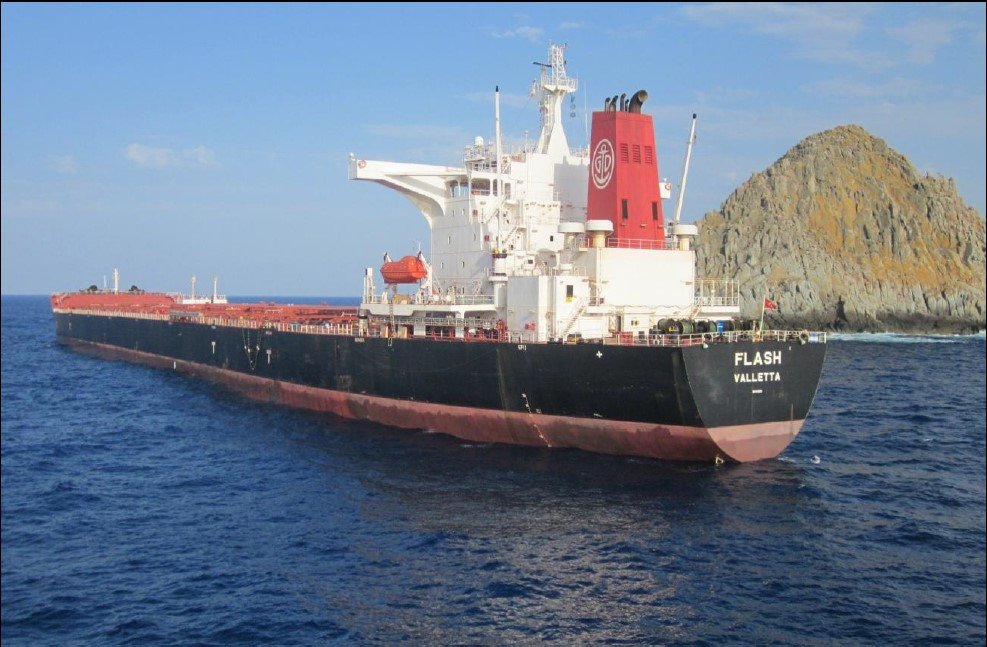
Important note: Aware Mate was not installed on Flash. This page uses the official investigation to show where an earlier on-board vigilance alert could have helped interrupt the incident chain. Any intervention sequence is illustrative, not proof of a live deployment.
On 25 June 2012, the Maltese bulk carrier Flash grounded on the rocky shoals of Galitons de l’est off Ile de la Galite, Tunisia. There were no injuries or pollution, but the vessel sustained extensive damage to the fore and bottom of the hull. This incident shows how quickly a quiet bridge can become high risk when one fatigued watchkeeper is left alone.

The investigation found that the second mate, alone on the bridge, fell asleep shortly after taking over the midnight watch. As Flash approached the next waypoint north of Ile de la Galite, current set the ship south towards danger. An ECDIS alarm later sounded, but the officer remained asleep. When he woke shortly before impact, it was already too late to reduce speed or change course effectively.
This casualty did not arise from one failure alone. Several protective layers were weak at the same time.
• The officer of the watch was alone on the bridge and no dedicated lookout was posted.
• The investigation found that he had become increasingly fatigued after a long period at sea and had adopted a sleep pattern that reduced effective rest before the midnight watch.
• The master’s instructions on when to post a lookout created ambiguity and did not provide a strong practical safeguard.
• No BNWAS was fitted, so there was no additional alerting barrier once the officer fell asleep.
In a case like Flash, the role of an additional vigilance layer is not to replace proper lookout practice or fatigue management. It is to surface loss of alertness earlier, while the ship is still only beginning to diverge from the intended track.
The value here is earlier warning and earlier recovery. The aim is not to claim that every grounding would be prevented, but to reduce the chance that a quiet bridge lapse turns into hull damage, off-hire, and claims exposure.
Aware Mate is an on-board, human-in-the-loop vigilance layer designed to complement bridge watchkeeping and BNWAS. It estimates sustained drowsiness and distraction risk from non-identifying cues such as eyelid closure, gaze stability, head position, and posture, then issues graded local alerts. Where configured, it can use a BNWAS-compatible dry-contact path to escalate through existing shipboard alarm chains.
Aware Mate does not steer the vessel, take navigational decisions, identify people, diagnose medical conditions, perform emotion recognition, or send raw video ashore by default. Standard operation is on-board processing with configurable retention for derived metrics and event logs.
Quiet night passages can become high risk quickly if bridge watchkeeping turns into a one-person routine.
Even without pollution or injury, a fatigue-driven grounding can still mean repair cost, off-hire, and claims complexity.
This case shows the gap between being physically present on the bridge and being effectively alert on the bridge.
Take-home message: Flash is a clear case for earlier vigilance signals on top of better lookout discipline and fatigue control.
| Cookie | Duration | Description |
|---|---|---|
| cookielawinfo-checkbox-analytics | 11 months | This cookie is set by GDPR Cookie Consent plugin. The cookie is used to store the user consent for the cookies in the category "Analytics". |
| cookielawinfo-checkbox-functional | 11 months | The cookie is set by GDPR cookie consent to record the user consent for the cookies in the category "Functional". |
| cookielawinfo-checkbox-necessary | 11 months | This cookie is set by GDPR Cookie Consent plugin. The cookies is used to store the user consent for the cookies in the category "Necessary". |
| cookielawinfo-checkbox-others | 11 months | This cookie is set by GDPR Cookie Consent plugin. The cookie is used to store the user consent for the cookies in the category "Other. |
| cookielawinfo-checkbox-performance | 11 months | This cookie is set by GDPR Cookie Consent plugin. The cookie is used to store the user consent for the cookies in the category "Performance". |
| viewed_cookie_policy | 11 months | The cookie is set by the GDPR Cookie Consent plugin and is used to store whether or not user has consented to the use of cookies. It does not store any personal data. |
See how Aware Mate fits your bridge setup and discuss operational fit, privacy boundaries, and next steps.